Honey extraction
Coming Soon…
Something exciting is on its way! Stay tuned—you won’t want to miss it.
What is Honeycomb?
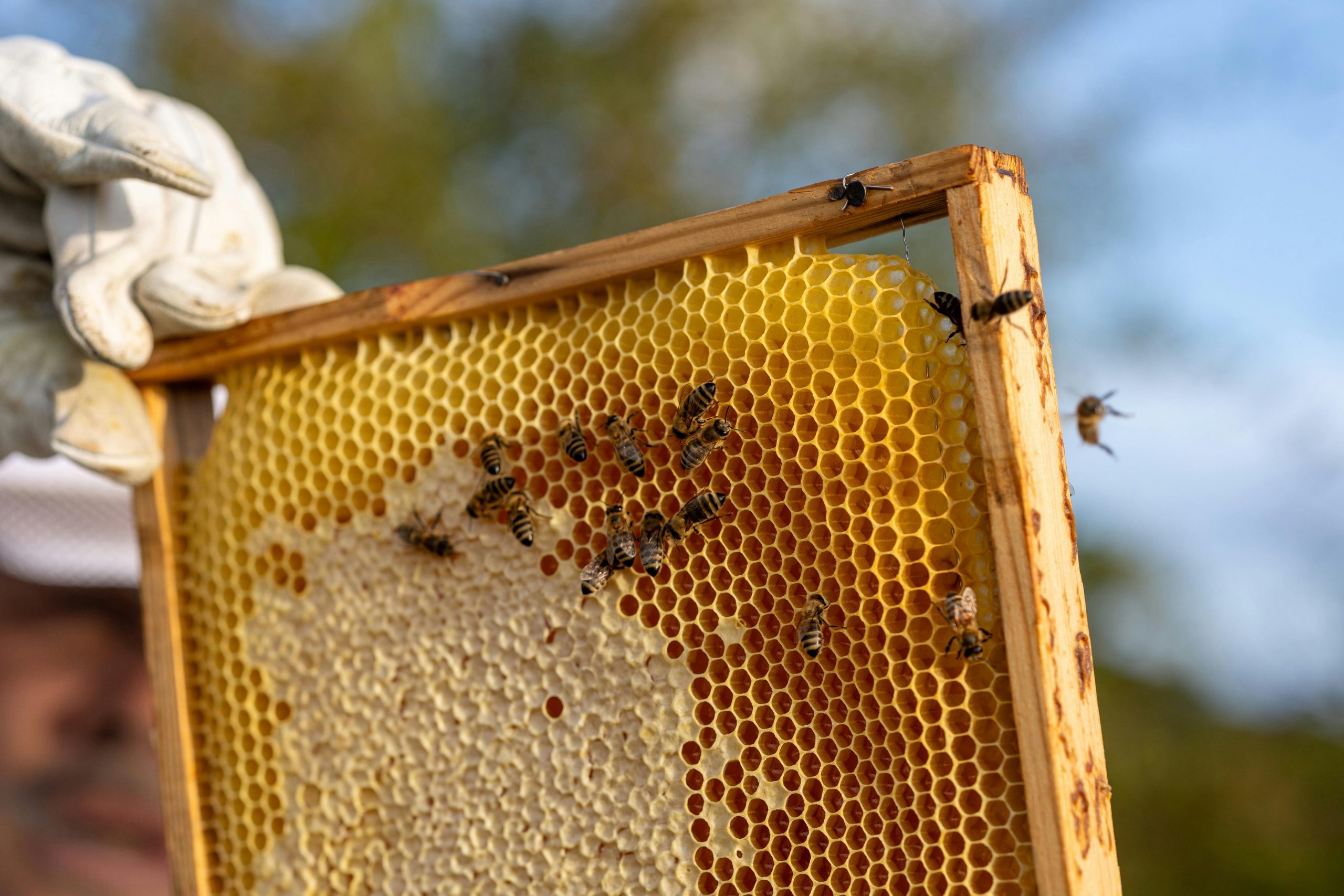
Honeycomb is a cluster of repeating hexagonal wax cells that fill the interior structure of the honeybee hive. The honeycomb structure is constructed by two primary parts including the main surface area which is firm and textural - the wax - and then the honey and nectar that is stored within the hexagonal wax compartments. These neat compartments are the building blocks of the honeybee colony, used to store food, rear young, and protect the hive.
Comb construction requires the effort of many worker bees. Young worker bees eat honey and extrude wax through eight glands on their abdomens. As the wax builds up, it flakes off in clear, flat scales which are then gathered and chewed by the worker bees to soften and make the wax malleable. This processed wax builds the comb, working from the hive frame out, attaching new sides to existing cells. It takes a hive between two weeks and two months to produce the comb needed to store honey necessary to feed the colony through the winter months.
Honeycomb, because it is untouched by humans and unprocessed like liquid honey, still retains all its pollen, propolis, and natural health benefits. As a consumer, you eat the whole thing: both the honey and the beeswax. It’s all edible! Biting into a chunk of fresh honeycomb is the purest way to enjoy honey. The wax adds a delightfully chewy texture, and the sensory experience of the wax cells full of honey exploding in your mouth is unlike any other.

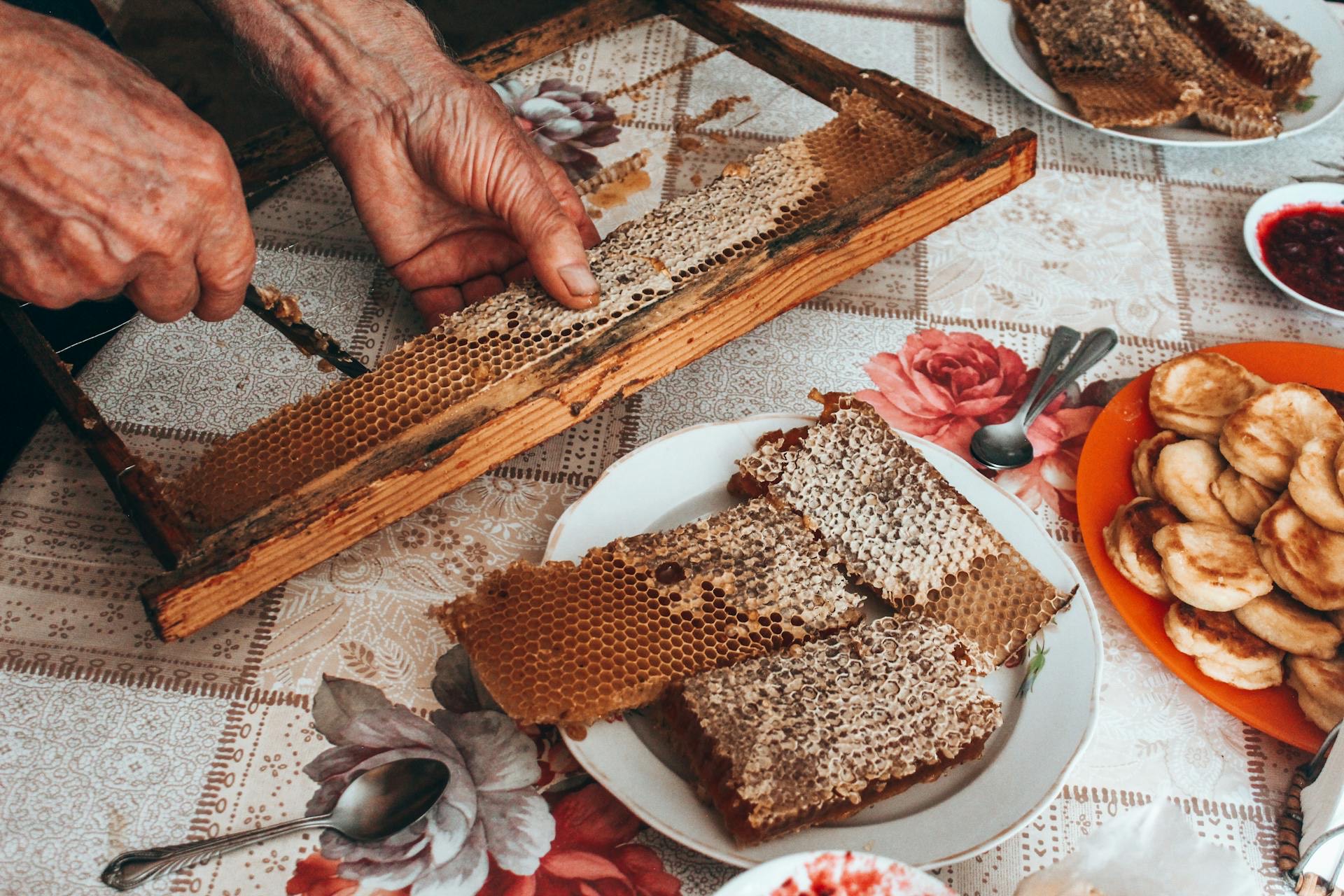
Honey extraction is the process of separating honey from the honeycomb, making it ready for packaging and consumption. In Mama's Roots we will deal only with the extraction. Here's an overview of the steps involved and the technical requirements:
Extraction steps
- Harvesting the Frames: Beekeepers collect honey by removing frames from the beehive. These frames are covered in wax honeycomb cells filled with honey.
- Uncapping: The first step in extraction is uncapping the cells. This can be done using a heated knife or an uncapping machine that removes the thin layer of beeswax sealing the honeycomb cells.
- Extraction: Once uncapped, the frames are placed in an extractor—a centrifuge-like device. The extractor spins the frames, using centrifugal force to extract honey from the cells without damaging the comb.
- Straining: The honey extracted from the frames may contain wax, bee parts, or other debris. Straining the honey through fine-mesh filters or sieves removes these impurities, leaving behind pure honey.
Technical Requirements
- Uncapping Equipment: This includes an uncapping knife or machine to remove the wax cappings from the honeycomb.
- Extractor: A honey extractor is essential for spinning the frames and extracting honey. These can range from manual hand-cranked extractors to electrically powered ones, depending on the scale of operations.
- Strainers or Filters: To remove debris and impurities from the extracted honey, fine-mesh filters or sieves are required.
- Storage Containers: Clean and food-grade containers to collect and store the extracted honey temporarily before packaging.
RELATED PRODUCTS
Mama’s menu
What you'll cook
- Yemista: Oven baked tomatoes and peppers stuffed with rice, fresh vegetables, herbs and extra virgin olive oil
- Spinach Cheese Rolls: Crunchy mini pies with feta cheese, fresh spinach and herbs wrapped in phyllo dough and baked in the oven
- Cretan Ntakos salad: Crunchy barley rusks soaked in olive oil, diced tomato, capers, oregano and sour mizithra cheese
- Kagiana: Greek scrambled eggs, made with grated tomatoes , peppers and feta cheese
- Greek Tzatziki Sauce: A traditional Greek garlic, yogurt, and cucumber sauce
- Loukoumades: Small round doughnuts with honey and cinnamon